
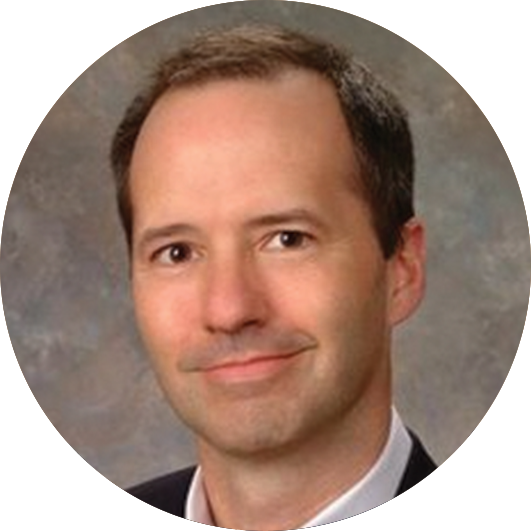
Laura Sandefer Co-founder of Acton Academy and author of Courage to Grow, the story of Acton's origin and learner-driven model.
A tutoring and resource centre in Vancouver
What happens when your child doesn't have to fit the mould? When the pace belongs to the child?
You've seen it. The quiet focus when the work matters to them. The persistence when they've decided to finish something. The questions no one assigned.
At Trellis, that's the whole day.
Trellis is a tutoring and resource centre. It is a learning community for homeschooling families in Vancouver.
Ages five to eight · Monday to Friday, 9:00–3:00 · One small mixed-age studio · Vancouver
Thirty minutes with Saba, one of our founders. Bring every question you have.
Trellis is an Acton Academy affiliate — part of a worldwide network of over 300 learning studios.
Every Acton studio is built on the same conviction: children are capable of far more than conventional wisdom often asks of them. And on the same design: a studio where children lead their own learning, work at their own pace, and are held to a real standard — guided by adults who begin with questions, then offer support when a child needs it.
Acton Academy began in Austin in 2009, when Jeff and Laura Sandefer set out to build a different kind of learning environment for their own children. Trellis brings that model home to Vancouver.
The day opens with a story, a question, or a challenge that children begin by exploring for themselves.
For reading, writing, and math, children use materials and methods inspired by Montessori. Each child works at the right level of challenge and moves forward by demonstrating mastery.
Real, unscheduled play. It is a serious part of the day.
Lunch comes from home, and it is unhurried. Each child decides whether they want quiet time alone or lunch with friends.
Children take on hands-on team projects that stretch across multiple weeks: building, testing, researching, presenting, and revising.
Everyone reads. Each child chooses whether to read alone or with others. The guide and Saba read too.
The children care for the shared space, because the studio is theirs.
The day closes with reflection: What did I finish? Where did I get stuck? What needs repair? What will I do differently tomorrow?
Parents register their child as a home learner and remain the child's educational decision-maker. Trellis provides the studio, the guide, and the program. Children come to Trellis Monday to Friday, 9:00 to 3:00.
Trellis is a learning community for homeschooling families — not a school.
Trellis serves children aged five to eight in one small, mixed-age studio. The studio is screen-free.
One full-time guide leads the studio and works directly with the children. Saba is on site every day to support the guide.
The guide begins with questions, giving each child room to think before offering support. They allow time to work through difficulty, then step in when support is needed. And they hold clear boundaries, so freedom never becomes drift.
Everything the guide does serves three aims Acton names in order:
The role calls for a guide who is warm-hearted and tough-minded, calm and consistent enough that children know what to expect. Their work is measured by what the children become able to do for themselves.

Founders
So did we.
Long before Trellis had a name, we began thinking seriously about the kind of learning environment we would choose for our daughter.
One question kept returning: who would take her independence, her curiosity, her character, and her academics seriously — at the same time?
So we went looking for a place that would take her seriously — not manage her, not entertain her, not rehearse her for later.
We knew the kind of environment we were looking for. Then we found its name: Acton.
Mastery instead of grades. Character built by doing. Adults who guide without taking over.
We decided to build it here. It's called Trellis: an Acton Academy.
We are choosing Trellis for our own family, too. Our daughter is part of the founding studio.
— Mosi & Saba
Thirty minutes with Saba, by video.
Trellis is intentionally small, learner-driven, and built on real responsibility. It may not be the right fit for every family.
It may be right for yours if you want your child to:
These studio practices are grounded in the mission, beliefs, and educational philosophy Trellis shares as an Acton Academy.
To inspire each person who enters our doors to find a calling that's uniquely theirs.
At Trellis, freedom is paired with responsibility. Through stories, discussions, and projects, children examine choices, consequences, and how their decisions affect other people.
Clear thinking leads to good decisions, good decisions lead to the right habits, the right habits forge character, and character determines destiny.
We promise, through Socratic guiding and experiential learning, to encourage each member of our community to:
The studio day runs Monday to Friday, 9:00–3:00, five days a week.
Year one is for children aged five to eight.
Every child must be at least five when they join Trellis. This is firm, with no exceptions.
Small is not the warm-up version.
It is the whole point of year one: a close community, a clear culture, and enough space for each learner to be known.
Trellis opens its doors to more families only after that culture is clearly established.
Trellis is an Acton Academy affiliate, part of a worldwide network of over 300 Acton Academies. As an affiliate, Trellis follows the Learning Design and learner-driven model created by Jeff and Laura Sandefer at the original Acton Academy in Austin. Trellis also draws on the network's learning resources and learns from other Acton communities.
Acton studios serve different ages, and older learners often use technology for independent work, research, writing, and projects.
Trellis serves children aged five to eight. In the first year, the studio is screen-free because this cohort does not need laptops to do excellent work. Learners have access to strong resources for math, reading, writing, hands-on quests, discussions, and real-world challenges.
As the studio grows and the needs of older learners change, technology is introduced intentionally — as a tool for meaningful work, not as a default environment.
An independent learner is not a child who never asks for help. It is a child who learns to take a next step: look for information, follow instructions, test a solution, notice when they are stuck, or ask for support when they need it. The guide offers timely help and Socratic questions while leaving ownership of the work with the learner.
A 30-minute video call with Saba, to answer all your questions.